
LET THE GAMES BEGIN: WHY THE WORLD CUP IS AFRICA’S BIGGEST BRANDING OPPORTUNITY AND WHY 90 MINUTES IS NOT ENOUGH
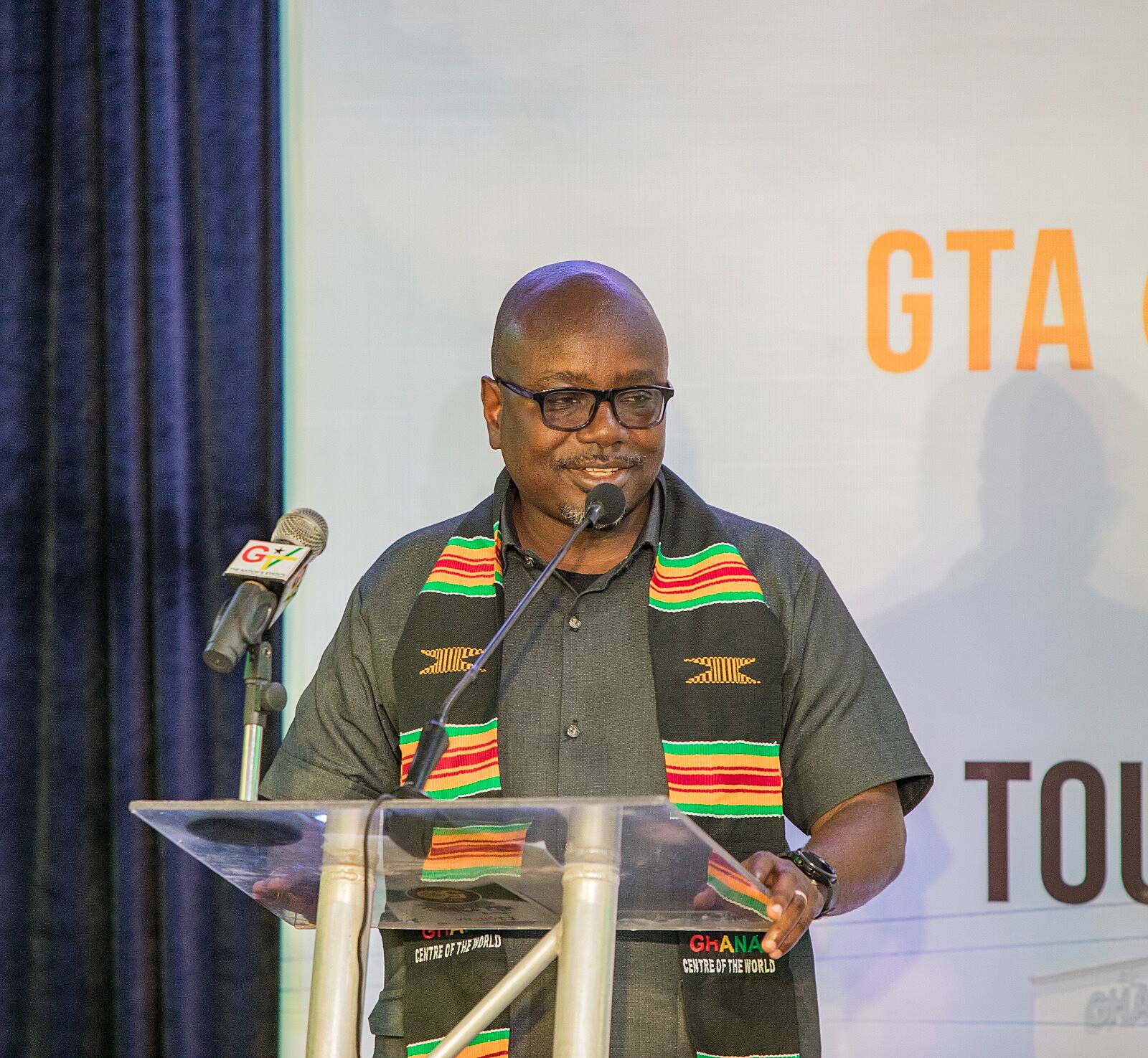
WRITTEN BY: AKWESI AGYEMANG
There is a moment, just before kick-off at a major international tournament, when something extraordinary happens, billions of people around the world fix their eyes on a patch of grass, a flag, a jersey, and a name. For ninety minutes, a nation becomes a story.
The question African football federations, governments, and tourism boards/authorities must urgently answer is this: are we telling ours?
The 2026 FIFA World Cup, co-hosted across the United States, Canada, and Mexico, is the largest sporting event in human history by audience. With an expanded 48-team format, an estimated five billion viewers across the tournament, and a global media ecosystem that now extends far beyond the television screen into social media, streaming, and digital content, the stakes for every participating nation have never been higher. For Africa’s ten qualifying nations, the stakes are higher still.
Sport as a Sovereign Asset
The relationship between sport and national identity is as old as competition itself. But the economics of that relationship have matured into something far more measurable and far more consequential than pride alone.
A 2022 study by World Biz Magazine estimated that the global sports industry contributes approximately $700 billion to the world economy annually, and that major tournaments generate brand value uplifts of between 3% and 12% for participating nations, depending on performance and visibility strategy. For context, that means a country with a national brand valued at $50 billion could see between $1.5 billion and $6 billion in brand value added simply by being present, visible, and memorable on the world stage.
South Africa’s hosting of the 2010 FIFA World Cup remains the continent’s most documented case study. Tourism arrivals increased by 8% in the year of the tournament. The country received an estimated $600 million in direct tourism revenue and, more significantly, a sustained uplift in foreign direct investment interest that analysts attributed in part to the reputational shift triggered by a successfully hosted global event. The world had expected chaos. It received a country.
That is the power of sport as a brand instrument. It does not just attract attention. It corrects perception.
Ten Flags, Ten Stories
Africa goes to the 2026 World Cup with ten nations on the pitch. Each carries a flag, a history, and an economy. Each carries an opportunity that extends far beyond football.
Consider the numbers that travel with those flags:
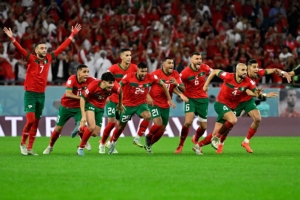
Morocco: one of Africa’s fastest-growing tourism destinations, welcoming 14.5 million international arrivals in 2023 and targeting 26 million by 2030. A deep run in 2026, building on their historic semi-final in Qatar 2022, would be worth hundreds of millions in earned media alone. Morocco has already demonstrated that intentional brand strategy around a World Cup works. The Atlas Lions became the story of Qatar not just because they won football matches, but because Morocco was everywhere, in the fan zones, the cultural activations, the global media narrative. In 2026, they will arrive as known architects of this playbook.
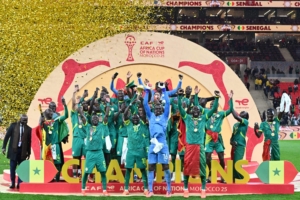
Senegal: current AFCON champions and a nation whose leadership has made the creative and tourism economy a centrepiece of national development strategy. Dakar’s growing profile as a cultural capital, anchored by its art biennale, its music scene, and its emerging tech ecosystem, is amplified every time a Senegalese player commands a global stage. A strong World Cup showing positions Senegal for exactly the kind of investor and tourist attention it is actively courting.
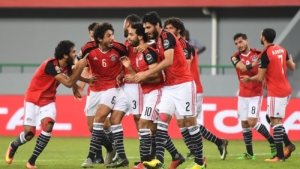
Egypt: home to one of the world’s most ancient and storied civilisations, with 15 million tourist arrivals targeted by 2028 and an infrastructure investment programme running into the tens of billions. Every image of an Egyptian player celebrating is a subliminal invitation to visit. Egypt’s challenge is converting football visibility into tourism conversion, and a coordinated campaign strategy in 2026 gives it the platform to do exactly that.
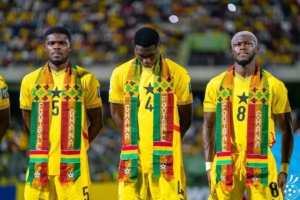
Ghana: the Black Stars carry more than a football legacy; they carry the symbolic weight of a nation that has long positioned itself as Africa’s democratic anchor and the continent’s gateway for diaspora return. The Year of Return and its successor Beyond the Return initiative already demonstrated Ghana’s ability to convert cultural identity into a global tourism movement, generating over $3.3 billion in tourism revenue in 2019 alone. When the Black Stars arrived in Qatar 2022 in their traditional fugu wear, they became the talk of town even if the results on the pitch didn’t go too well. A strong World Cup showing is a natural extension of a brand strategy that is already working. Every time a Ghanaian player lifts the ball, Accra, Kumasi, and the wider diaspora story lifts with it.
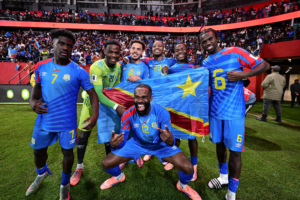
DR Congo: returning to the World Cup for the first time in a generation, the Democratic Republic of Congo carries one of Africa’s most layered and compelling national stories. Home of Congolese rumba, a UNESCO-listed cultural heritage, a music tradition that shaped the entire African continent, and a nation sitting atop an estimated $24 trillion in untapped mineral wealth, DR Congo’s World Cup appearance is an invitation to the world to look beyond the headlines and discover a country of extraordinary cultural depth, creative energy, and economic potential. The Leopards’ dramatic extra-time victory over Jamaica in the intercontinental play-offs was not just a football result. It was a statement of arrival. The brand work that should follow it must begin.
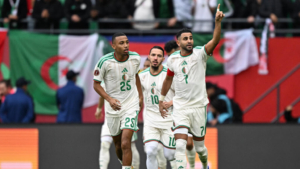
Algeria: one of Africa’s most consistent footballing nations and a country whose government has invested heavily in positioning Algiers as a regional business and cultural hub. Algeria’s Desert Foxes have a passionate global diaspora, particularly across France and Europe, that transforms every match into a transnational brand moment with direct reach into some of the world’s most affluent African diaspora communities.
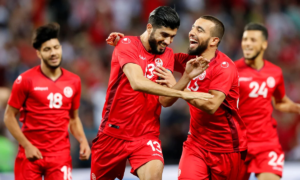
Tunisia: a nation rebuilding its tourism economy after a decade of headwinds, with some of the Mediterranean’s most spectacular heritage sites and a coastline that rivals any destination in the region. A visible, energetic World Cup presence is precisely the kind of soft reset Tunisia’s tourism brand needs.
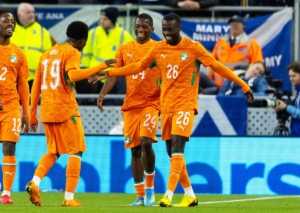
Ivory Coast: Africa’s cocoa giant and one of the continent’s most dynamic economies, with Abidjan increasingly asserting itself as West Africa’s commercial and cultural capital. The Elephants carry the weight of a country that has come through significant political turbulence to find stability and growth, a story the world needs to hear, and the World Cup is the platform to tell it.
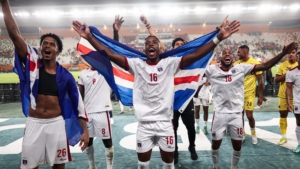
Cape Verde: perhaps the tournament’s most compelling underdog story from a brand perspective. For a small island nation of fewer than 600,000 people, qualifying for a World Cup, Cape Verde punches so far above its weight that its very presence is a branding exercise. The archipelago’s positioning as an emerging tourism and digital nomad destination is supercharged by every minute its players spend on the world’s biggest stage.
South Africa: the continent’s most industrialised economy and the nation that showed the world in 2010 what hosting a World Cup could do for African perception globally. Bafana Bafana’s return to the tournament, after years of near-misses, is a moment of national renewal and the country’s tourism and investment agencies are well-placed to amplify it, having done exactly this before. Maybe this will be the platform to correct the misperceptions of a xenophobic country.
The 90-Minute Trap
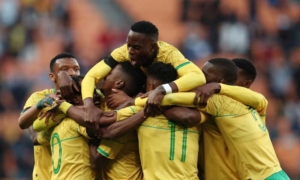
Here is the uncomfortable truth. Most African nations show up to major tournaments with exceptional footballers and almost no deliberate brand strategy. The jersey is magnificent. The infrastructure around it is largely absent.
Compare this to how the most sophisticated national brand operators approach major sporting events.
When South Korea reached the 2002 World Cup semi-finals on home soil, the Korean government had already deployed a coordinated strategy involving tourism boards, cultural ministries, trade promotion bodies, and a media campaign that used the tournament as a launchpad for repositioning the country in the global imagination. The result was not just football success. It was the beginning of what we now call the Korean Wave, a global cultural influence of South Koreas cultural phenomenon of K-pop, K-drama, and Korean consumer brands that followed a decade later.
Qatar spent an estimated $220 billion on the 2022 World Cup , not because it loves football, but because it understood that hosting the tournament was the most efficient rebranding exercise in the history of sovereign brand strategy. The return on that investment, in terms of tourism, FDI, and global name recognition, is still compounding.
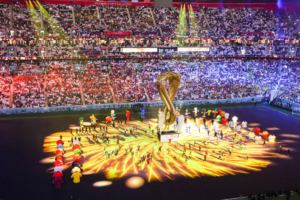
African nations are not hosting the 2026 tournament. But they are present in it. And presence, handled with intentionality, is its own form of platform.
What Intentionality Actually Looks Like
For Africa’s ten qualifying nations, the work that matters most does not happen on the pitch. It happens in the period before kick-off and the three months after.
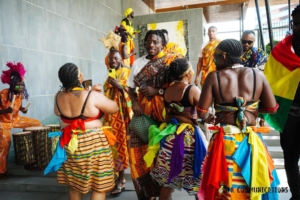
Before the tournament: each nation by now, should have deployed its tourism board, investment promotion authority, and cultural ministry with a unified campaign anchored in the football moment. In Ghana, the Ghana Tourism Authority (GTA) has announced series of activations and viewing parties in country and in the host cities in partnership with Tribe Culture.
Morocco did this brilliantly in Qatar, turning Doha’s streets into a Moroccan cultural embassy. The Atlas Lions became the story of the tournament not just because they won football matches, but because Morocco was everywhere.
During the tournament: Every match is a global broadcast moment. The pre-match, half-time, and post-match content space is largely unclaimed by African tourism and investment bodies. A coordinated digital content strategy deploying destination footage, cultural storytelling, and investment narratives timed to match days ,can generate tens of millions of impressions at a fraction of conventional advertising cost.
After the tournament: The window of heightened global attention typically lasts six to eight weeks after a nation’s exit from a tournament. This is when conversion happens and when curiosity triggered by football becomes a booked flight, a Google search, or an investment enquiry.
The nations that have follow-up campaigns ready to deploy in that window will capture returns that those who do not will simply leave on the table.
The Data Makes the Case
The numbers on sport and national brand return are no longer soft or anecdotal. They are compelling.
A Nielsen Sports study found that nations participating in the FIFA World Cup see an average 18% increase in destination search volumes during the tournament period.
The UN Tourism has documented that countries with strong World Cup performances see tourism enquiry spikes of between 25% and 40% in the six months following the tournament.
A Harvard Business Review analysis of the 2014 World Cup found that for every dollar Brazil spent on tournament-related brand promotion, it generated $7.40 in tourism and trade-related returns ,and this was a hosting nation with enormous pre-existing visibility.
For an African nation spending even a modest $5 million on a coordinated brand activation strategy around the 2026 World Cup, the potential return ,if executed with the discipline of a corporate marketing campaign rather than the improvisation of a press junket will be transformational.
The Invitation
The 2026 World Cup is not just a football tournament. It is the world’s largest opt-in audience, gathered around a shared moment of attention, asking ,consciously or not , to be surprised, moved, and invited somewhere.
Africa’s ten nations on that pitch are not just competing for a trophy. They are competing for perception, for investment, for tourism, for the next generation of global citizens who will decide where to travel, where to do business, and whose culture to fall in love with.
The games begin in a few days. The brand work should have begun already.
For the nations that show up with intentionality , with a story ready, a strategy deployed, and a team on the ground turning ninety minutes of football into a 365-day brand conversation , the returns will outlast the tournament by decades.
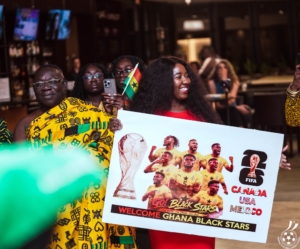
Let the games begin. And let Africa be ready.